ISOs vs. ISVs: Key Functions and Differences in Modern Payments
May 1, 2026
4 min read
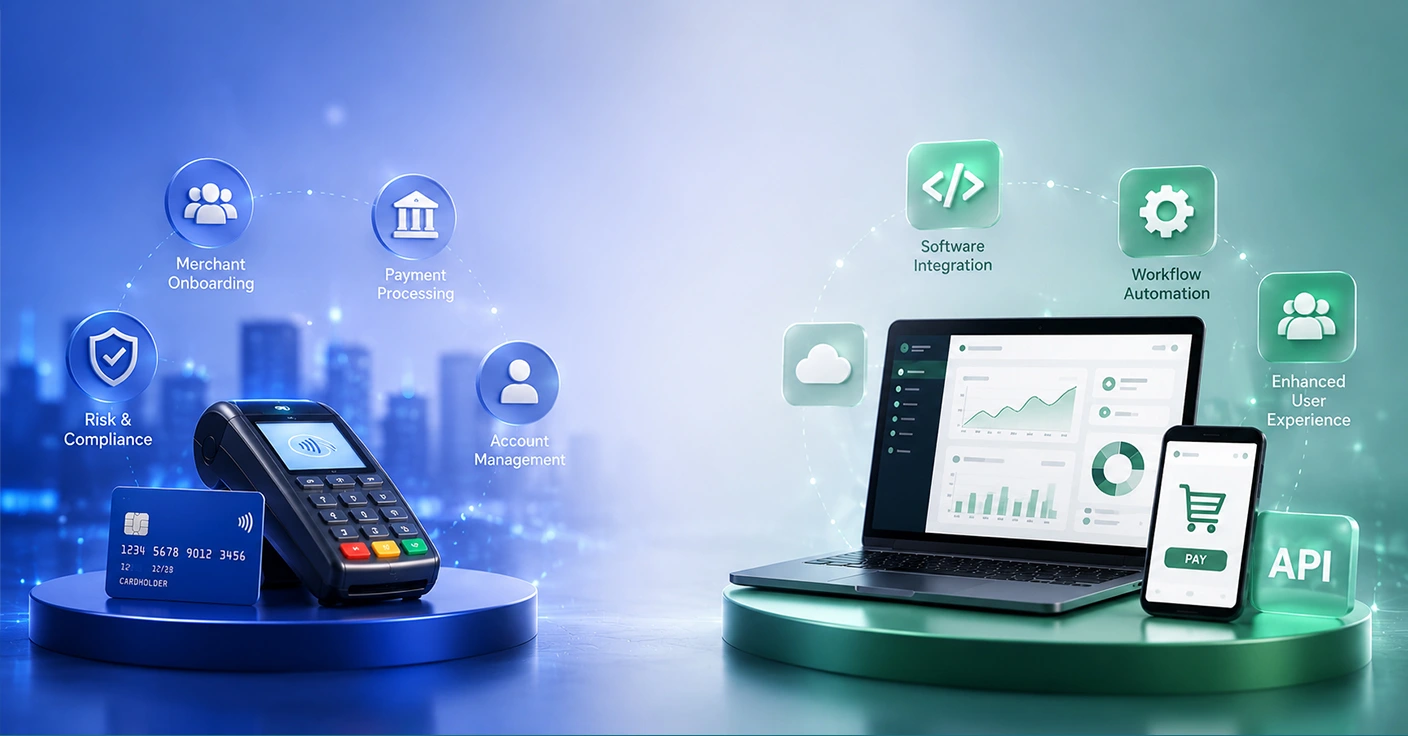
In the fast-paced landscape of payments, merchants face various businesses that require payment processors and gateways, as well as entities like ISOs and ISVs. They sound similar, but they are different types of organizations.
At Fairmount Payments, we help merchants navigate the complex ecosystem, enabling them to implement the optimal combination of technology and payment processing solutions for their businesses.
Many companies are seeking a robust payments ecosystem for adoption, and for those already partnered with a payments processor, it is important to understand their roles, limitations, and strengths.
In this blog, we will explore ISOs and ISVs, their offerings, differences, and importance.
What is an ISO?
An ISO is a third-party organisation that mediates between the payment processors/banks and merchants.
Key Functions of an ISO
Merchant acquisition and onboarding:
ISOs help merchants sign up and open their accounts, allowing them to accept payments with cards or digitally.
Resale of processing services and infrastructure:
ISOs can easily resell the payment processors’ or acquirers’ services, which include POS hardware, POS Software, gateways, and payment terminals.
Support, risk & compliance management:
The ISOs are also known as merchant service providers or wholesale ISOs, which offer customer support, fraud management, risk monitoring, and various other services such as customer care and maintenance.
Relationship management:
The ISO not only works with payment processors but also focuses on general customer queries, billing, and chargebacks, as they are the first merchant point of contact.
What is an ISV?
An ISV is a software vendor that primarily focuses on developing and selling its software apps. They can create applications, such as hardware or a platform, that help customers and businesses. In the payments world, ISVs often build:
POS systems
It is a POS system that runs on tablets, computers or terminals, enabling businesses to perform shop payments and more.
Payment-enabled shopping carts
It enables merchants to accept payments from their mobile apps or websites.
Business management tools with payments
ISV offers inventory management, retail management, CRM and booking systems with payment processing capabilities.
Back-office and value-added software
It offers software that supports payment operations, including analytics, risk management, fraud detection, reporting and more.
ISOs vs ISVs – Important Differences
1. Primary Function
The ISO focuses on services such as merchant acquisition, sales and reselling payments.
The ISV builds software applications such as POS systems, payment terminals, and e-commerce platforms.
2. What They Provide
ISO
- Create merchant accounts.
- Create payment infrastructure.
- Offer support, compliance, risk management, and services.
ISV
- Provide software products and platforms.
- Offer integrated payment tools.
- Give management, analytics, or operational software.
3. Revenue Model
ISO
- Commissions and residuals from transaction fees
- Onboarding fees
- Charges for value-added merchant services
ISV
- Allows software licensing fees
- Subscription or SaaS charges
- Offers flexible one-time software purchases or subscription-based pricing
4. Technology
ISO
- They do not own payment technologies.
- They rely on processors or third-party hardware/software.
ISV
- They own, control, and manage their software.
- They provide customised, innovative, and adaptable features for their customers.
5. Merchant Interaction
ISO
- They directly support merchant providers.
- They manage client onboarding, billing, troubleshooting, and relations.
ISV
- ISV interacts primarily through its software and hardware.
- They provide full technical support and integration assistance.
Which One Suits a Merchant – ISO, ISV, or Both?
Choosing among the ISOs and ISVs depends on the merchant’s business needs and future goals.
Below are the points that help you make the right choice.
- As a small or medium-sized business, partnering with ISOs helps you achieve a smooth onboarding process, support, and access to merchant accounts and payment terminals, allowing you to accept card or digital payments.
- Engaging with the ISV helps you to get software-driven operations, which include POS systems, inventory and retail management, billing, subscriptions, backend operations and more.
- For the complex businesses, you need to follow the hybrid approach and work with both ISOs and ISVs. They help you obtain software and hardware-related solutions such as online sales, billing, payouts, revenue streams, and split payments.
- Payments and e-commerce are growing fast with digital payments, mobile wallets and more. This creates a scalable, flexible and future-oriented model for their customers.
Conclusion
Although the names look similar, ISO and ISV, their roles in the payments system are different. ISO mainly focuses on merchants and service providers, and ISVs work with software for merchant operations. As digital payments become more complex, roles are shifting with one another.
At Fairmount Payments, we focus on delivering value to offer tailored payment solutions that fulfil merchant requirements, whether they are ISO services, an ISV platform or their combination. If you are a merchant, partner, or business seeking payment solutions, choose Fairmount Payments as your partner for payment processing and POS software/ Hardware.